Martial Ethics
- Benjamin Zhang
- Dec 1, 2025
- 14 min read

Updated: Dec 8, 2025
1.Overview
What is this?
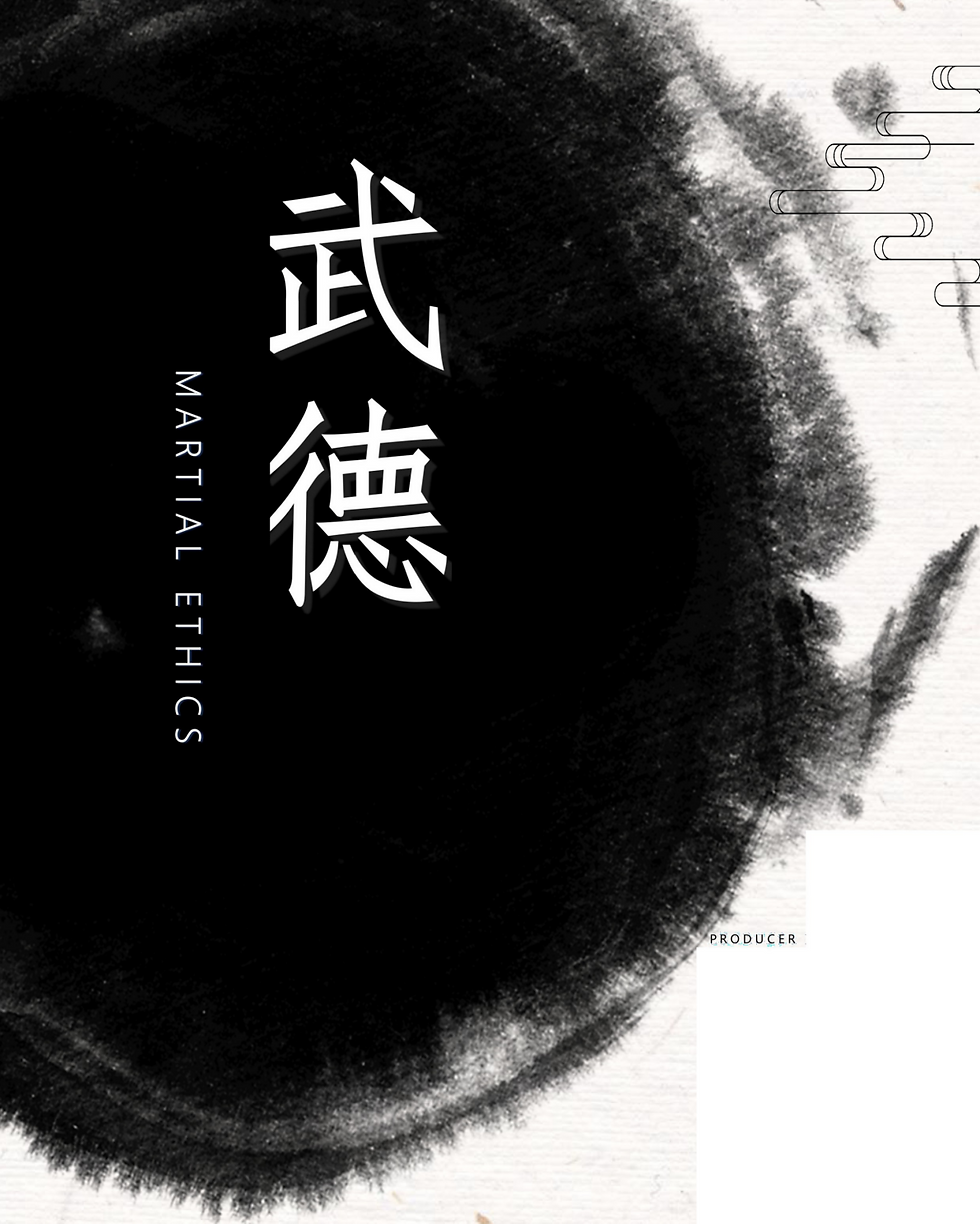
"Martial Ethics" is a side-scrolling action platformer inspired by Wuxia(Martial novel), centered on the concept of "武德" (Martial Ethics)
—the harmony of martial skill and
moral integrity. In a world where traditional values have decayed into hollow arguments, players take on a protagonist who challenges the hypocrisy of a society that has strayed from true Martial Ethics.
Why It’s Interesting
"Martial Ethics" satirically explores society's misuse of moral codes to stifle genuine justice and
self-defense. In this world, hollow verbal confrontations replace true martial arts, urging players to confront the dangers of superficial ethics. With a blend of martial arts aesthetics, bullet-hell gameplay, and a unique "word bullet" system, this game challenges social conformity and underscores the need for authentic values.
What I did?
As the producer, scriptwriter, and lead artist, I guided the game's vision from concept to completion. My role included:
-Story & Theme: Crafted the storyline and character arcs to highlight ethical conflicts in a Wuxia -inspired world.
-Art & Design: Created character art, pixel designs, and storyboards to bring the martial world to life.
-Level & Gameplay Design: Designed levels and combat mechanics, including the innovative “word bullet” system.
-Team Coordination: Led collaboration with Jason Mai (programming) and Harry Liu (music), managing resources via GitHub.
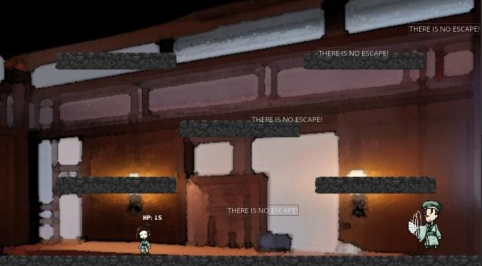
Current Demo
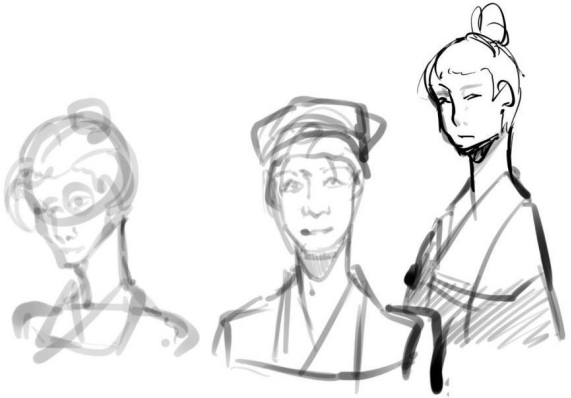
Concept Sketches
2.Inspiration
The most important concept in Wuxia (martial arts fiction) is " 武德" (Martial Ethics). " 武" represents martial force, a classic double-edged sword that can protect others or harm them through violence. "德" represents Ethics, the meaning of one's actions, serving as the key to unlocking "武" and as a safeguard that limits it.
Ethics seems like an important factor. Without Ethics, martial force becomes meaningless—if the reason for wielding a blade is unclear, no amount of force is free from risk. At this moment, Ethics makes martial force meaningful, turning it from mere violence into an action grounded in reason and purpose.
However, martial force is often underappreciated. In the 21st century, pure violence is rejected or actively avoided. As an action prone to cause violence, martial force has become something to shy away from. Avoiding martial force and promoting ethical reason has become a common consensus: people want to solve problems non-violently, a method advocated by today's society. The intent behind this approach is good, but its drawbacks are also clear. If morality is deliberately twisted, manipulated, or altered by malicious individuals to enslave or exploit others' ideologies, does morality still have its original effect? This makes me think of the darkness in today's society and the hypocrisy and deceit in human nature. In the absence of force, people abandon their tools of self-defense, leaving themselves at the mercy of malicious actors, becoming pawns to be manipulated.
This is the case even in today's society, where force is not the main pursuit. In the world of Wuxia, where martial force is highly valued, what would happen if people's martial arts—essential for survival—were taken away, and they blindly pursued a formalized version of Ethics? What if Ethics was misinterpreted or became a hypocritical excuse? If martial force itself was stigmatized and seen as a force for rebellion against injustice, but the so-called "Martial Ethics" took it away—what is the true nature of this concept of "Martial Ethics"?
I want to directly present my thoughts on the formalized, hypocritical morality that people hold in their hearts. I also want the characters in the game and the players to reflect on the essence of "Martial Ethics."
Players will play as a protagonist who is seen as a symbol of "not adhering to Martial Ethics,” who ambushes others in debates about justice and martial arts. The protagonist, considered an outcast in society, fights against those who blindly follow the trends of the martial world and embody the hypocrisy of "adhering to Martial Ethics”, exploring and changing the world as a social outlier.
2.Process
To bring my vision to life, I started by outlining the game’s world and creating concept art for the main characters. Once the art style and plot were finalized, I began preparing for development. Although I have coding skills, I estimated the workload and recognized I would need support with programming.
Additionally, music and sound design are not my strengths, so I reached out to classmates and online communities to find collaborators.
After laying the foundation, I faced a key challenge: translating my ideas into specific gameplay mechanics. Initially, I considered a text-heavy visual novel format, but in playtesting, I realized it lacked the visual impact and player engagement needed to represent the "martial arts" themes. I brainstormed alternatives,
and two ideas emerged: a turn-based battle mode and a platformer. The turn-based option would have impressive visuals and a tactical feel, but it lacked the excitement of real-time play. The platformer, on the other hand, offered the thrill of real-time battles and player agency but had less visual impact than I envisioned.
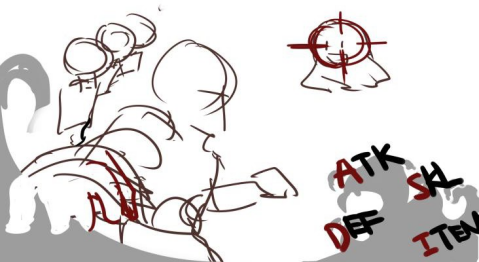
To evaluate both options, I created prototypes for each. Using GameMaker Studio, I worked with my programmer on a turn-based system, integrating basic UI and sketches to simulate the envisioned visuals. I also adapted code from a previous platformer project, adding a unique "Word Bullet" mechanic to represent the martial arts theme in a more active way. After testing both prototypes with friends, the feedback was clear: while the
turn-based system showcased my art, the platformer was far more engaging, and players enjoyed the added mechanic.
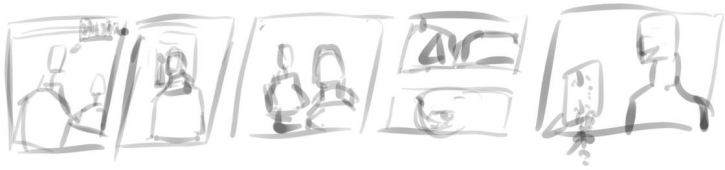
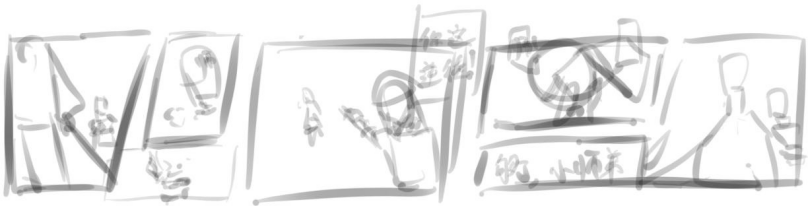
I decided to proceed with the platformer for core gameplay, retaining visual novel elements for story exposition. After completing the first version, I ran playtests with both returning players and new ones. I noticed that familiar players engaged initially but lost interest in the story over time, while new players skipped the plot entirely in favor of battles. My team identified that the narrative lacked interactivity and visual appeal, so we brainstormed ways to keep players invested. While animation was an initial idea, it proved too resource-intensive. Instead, we opted to use comic-style storyboards, adding onomatopoeia and sound effects for a more immersive effect.
Additionally, new players struggled with the controls, so we designed a tutorial level to teach gameplay
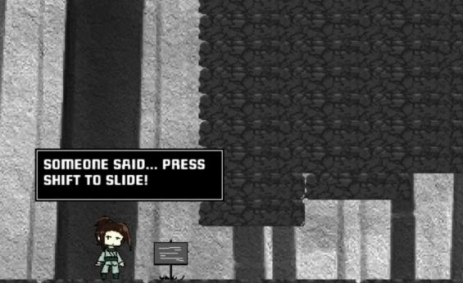
mechanics interactively. Rather than using a simple command chart, we incorporated button functions directly into the map, allowing players to learn through hands-on interaction.
I handled the pixel art, character design, scene illustrations, and storyboard creation. Working primarily in Procreate, I drafted character designs, storyboards, and animations before refining them in Photoshop and SAI2. Once completed, I compiled assets into a package
for our programmer to import into GameMaker for testing.
Throughout development, we encountered challenges in communication and resource management, so we held regular meetings and used GitHub to coordinate and track our progress remotely. After multiple rounds of playtesting with diverse players, we refined the game and successfully completed the project.
3.World Setting
This is a low-martial world where people use basic hand-to-hand combat and internal martial arts. Deaths and injuries are common. To address this, in the year 560 of the Martial World, the martial alliance leader arose to resolve these issues. After becoming the leader, he promoted the use of communication and verbal disputes instead of unnecessary conflict, advocating for verbal attacks over martial fights. He emphasized the "Ethics" in "Martial Ethics," reducing the "Martial" element. He called this true "Martial Ethics." Although opposed, people feared his strength and were forced to adopt the teachings of the martial alliance. Many martial sects, however, secretly developed martial arts techniques that harmed others during verbal disputes, creating a new form of resistance.
The new martial world turned the once chivalrous and heroic landscape into one filled with hypocrisy and corruption. Although casualties decreased, the spirit of the martial world became duller. Some people memorized verbal attacks, abandoning thoughts of their own martial path. Others took advantage of the new environment, disregarding justice and morality. The protagonist, a martial arts prodigy who was terrible at verbal attacks, saw the martial world as hypocritical and corrupt. He sought to change what he saw as a perversion of "Martial Ethics."
Sects:
The Kongtong Sect, known for harming others with their “Internal energy”, now uses speech imbued with internal energy to injure people, causing them to be shaken by this force. Under the new order of the martial world, they have shifted from using internal energy to enhance their physical strength and uphold justice, to using it solely to amplify their voices and casting soundwave-based spells to harm others. Their disciples have become a strange mix, appearing like scholars in form but completely lacking the demeanor of one.
The Tang Clan, which harms others with assassin weapons, now uses words to catch their opponents off guard before launching a hidden attack. Once a rare and elusive sect, known for their poison-making and mastery of hidden weapons, they were once considered the least virtuous of all sects. But with the new martial world order, they have transformed into one of the most prominent sects. Their method involves using silencing and paralyzing drugs during battles, rendering their opponents speechless, allowing them to verbally assault their foes at will.
The Beggar Sect, known for their surprise attacks, now debates while unleashing their animals to bite their opponents. Since the sect is not a grand or prestigious one, its membership is extremely loose. Although it once valued the character of those joining its ranks, recent years, under the influence of the martial world’s trends, have seen them accept anyone down on their luck, regardless of their moral standing. Their discourse has degraded into crude street brawls, filled with personal attacks. While their pets occupy the opponent, they can freely assault them with words.
The Wudang Sect, whose speech is highly aggressive, holds righteousness as their creed. Under the teachings of their current sect leader, they possess a strong faith in Taoism. However, influenced by the broader environment, they have also learned to harm others with words. Yet due to the rigidness of their current leader, none of the sect’s members truly seek the Way, leaving them with no particularly sharp arguments. They are nothing more than an empty shell blindly following the trends of the martial world.
Shaolin, famed for their defensive strength, does not enjoy verbally attacking others, often taking a long time to respond in debates. As a result, they initially fell behind when the martial world began to change. However, their abbots later devised
a strategy: using internal energy to protect their ears from verbal assaults and unleashing a powerful attack only when they choose to speak. This technique, known as the sect’s ultimate skill, “Silent Zen,” has elevated Shaolin to great heights in the martial world. Power and influence have since caused Shaolin to cease discerning right from wrong, with all its members following their own path, forsaking the compassion to save all beings.
3.Game Play
This game will integrate platforming and side-scrolling action in its design. The player will use the arrow keys for basic movement and spacebar to jump, interacting with the environment to solve puzzles and progress by defeating enemies that shoot bullet-hell-like projectiles.
1.Design Elements:
In the game’s world, due to martial reforms, people no longer resort to traditional martial arts to harm others. To reflect this shift towards "persuasion through reasoning" and away from traditional martial arts, most people attempt to "reason" with their opponents, using verbal attacks to cause harm. The core design point lies in visualizing the concept of "hurting others with words."
Control System:
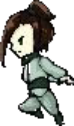
Since this is a platforming game, the player will have the basic platforming actions. The player will move using WASD or arrow keys, jump with the spacebar, and slide with shift. The attack action is mapped to the "J" key.
Combat System:
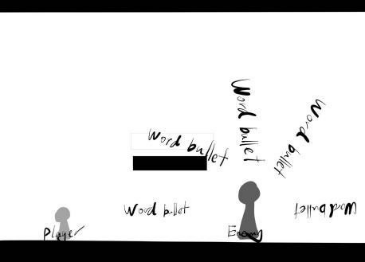
Enemies: As people who conform to the new changes in the martial world, their primary attack method is verbal. In the game, these verbal attacks take the form of word-based projectiles, called "Yan Dan" (word bullets). The range of these projectiles is long, eliminating the need for close combat, making it a common attack method among martial artists. These word bullets often target the opponent’s character and behavior, visually representing criticism of the other party, which frequently devolves into personal attacks and insults. What started as friendly debate aimed at maintaining peace in the martial world has now become the root of hostility and conflict.
Though word bullets seem harmless, they actually demand a great deal of eloquence and talent. When people talk excessively, they may fail to keep up the conversation, entering a state called "Dry mouth”. During this phase, they cannot attack, and since they have abandoned martial arts, they are often left defenseless, open to being easily defeated.
Protagonist: As someone who is not skilled in rhetoric, the protagonist cannot use verbal attacks. Instead, they are seen as someone who "does not adhere to martial virtue" and can only attack enemies during their "Dry mouth” phase, when the enemy is defenseless. By exploiting the opponent’s exhaustion, the protagonist secures victory.
2.Creative Design:
Level Design and Guidance:
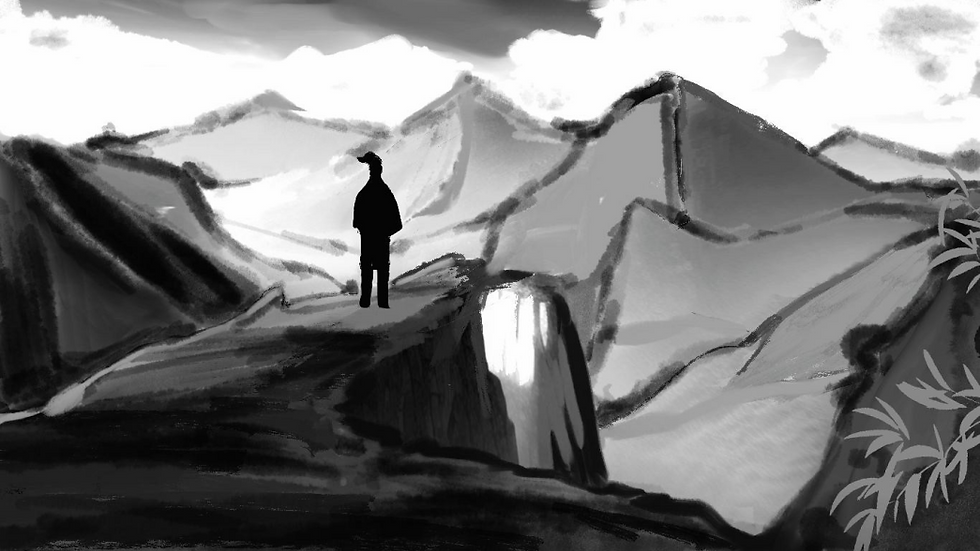
To familiarize players with the combat system, the plot sets up a scenario where the protagonist takes on a mission in the mountains to earn money for living. This allows players to get to know the protagonist's background and the treatment
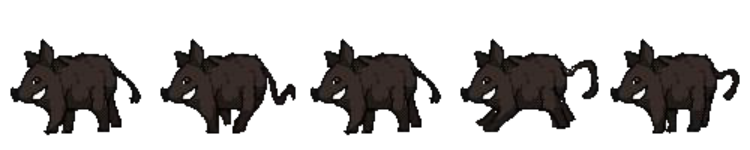
they receive from their sect, as well as understand the basic combat mechanics. This level is serve as tutorial so player will not hurt by the boars.
After mastering the basic combat, players will encounter enemies with different mechanics and attack styles. Each enemy has unique bullet patterns and movement behaviors.
For the first boss, the Junior Brother will move between the platforms and will only fire word bullets slowly. Their "dry mouth" phase occurs very quickly, making it an easy introduction to boss battles.
Subsequent levels will gradually increase in difficulty. For example, the Master will move randomly across the screen, requiring the player to strategically use platforming to deal damage.
Combat Design:
Players must skillfully use platform jumps and sliding to dodge the enemy’s word bullets and deal damage during the opponent’s "dry mouth" phase (indicated by the enemy with breathing animation). As the game progresses,
players will acquire different attack abilities through various means.
Attack: When the player presses the attack button, a sword aura will be generated in front of them. This aura can damage enemies during their "dry mouth" phase. However, when enemies are not in this phase, they will be on guard and immune to damage.
Jumping: Jumping allows the player to reach other platforms, effectively dodging or positioning themselves to attack moving enemies.
Sliding: Sliding gives the player a brief window of invincibility, allowing them to avoid enemy attacks or pass through areas that cannot be traversed by walking. This is a core mechanic for both puzzle-solving and combat.
"Word Bullet" Mechanic Design:
All enemies the player encounters will have a "word bullet" system. Word bullets will appear in a bullet-hell format.
After firing a certain number of word bullets, the enemy will enter a "dry mouth" phase, during which they stop firing and cease movement for a short period. During this period, the player can land basic attacks. When hit by word bullets, the player will lose health, and when health reaches zero, they will enter a "weakened" state. In this state, the enemy will switch to a "finisher" mode, where one more hit will end the game.
4.Character Design
To give players a subconscious sense of classic martial world elements, I will emphasize two key aspects in character design: "ink painting" and "wuxia". Since the protagonist's sect has fallen into decline due to the sect leader's blind adherence to contemporary martial world trends, I will reflect the sect's poverty in the
simplicity of their clothing.
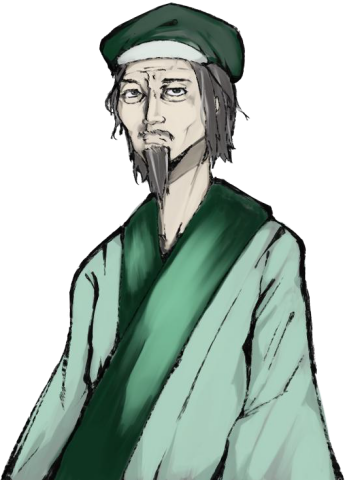
Master:
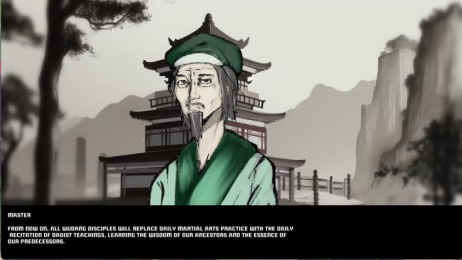
The sect leader of Wudang, the Master has studied Daoism from a young age and, after joining Wudang, developed great admiration for its former masters. He diligently studied Wudang's Daoist methods and martial arts, eventually becoming the sect leader. With years of experience, he has unwavering faith in Wudang’s traditions and strongly believes in the values of respecting teachers and elders, adhering to the principle that no one should challenge their superiors. To preserve the legacy of his predecessors, he has worked hard to protect Wudang's reputation and has embraced every change in the martial world.
In recent years, following the reforms in the martial world, he has gradually shifted the focus of his disciples from learning martial arts to mastering verbal attacks and internal energy, under the banner of "promoting the Wudang spirit and persuading others with virtue." However, his blind adherence to the
tradition of respecting elders has caused his disciples to lose their mastery of Wudang’s authentic martial arts.
In combat, due to his earlier training in light-footed techniques, his movements are unpredictable and elusive, as he randomly appears in different areas of the screen during battle.
The Master represents the kind of people in society who, due to old age, no longer have the passion or energy to explore new ideas or think critically. Instead, they gradually sink into the routine of everyday life, relying on their high position to get by, knowingly becoming accomplices to an unjust system.
Pixel Arts
Senior Brother:
The senior disciple of Wudang, he is the Master's most beloved student. Gifted with exceptional martial arts talent, he mastered Wudang's signature technique, the Dragon Palm, at just twelve years old. He is undoubtedly the deserving Senior Brother, admired by countless other disciples. However, following the reforms in the martial world, he was chosen by the Master to be the first to implement the changes and was forced to abandon the path of martial arts.
Fortunately, his influence within the sect led his junior brothers and sisters to follow the reforms without resistance. Despite this, the Senior Brother, bound by his duty to set an example and unable to defy the Master’s authority, secretly harbors doubts about the new martial world system. His once great martial skills gradually fell into disuse, though his exceptional talent in martial arts allowed him to retain deep internal strength. He can still injure others by merely infusing his words with internal energy, making him an unquestionably powerful figure.
However, his indecisive nature prevents him from choosing between his personal beliefs and temporary peace. He muddles through life, serving as the peacemaker in the sect. Although respected, he feels a lingering
sense of loss—an unshakable feeling that something from his martial training days is missing.
In battle, due to his previous martial training, he can unleash internal energy shaped like a hand to harm others, often catching opponents by surprise.
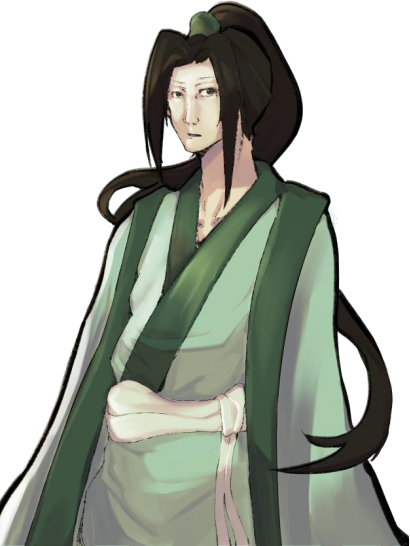
The Senior Brother represents those who are lost in the current societal landscape. They are individuals who should have the drive and ability to explore and resist, but due to their own weakness, they find themselves partly forced, partly willing to surrender their strength to fight back. As a result, they suffer in a society they don’t truly belong to, even though they have the power to change it, but still refuse to use it.
Junior Brother:
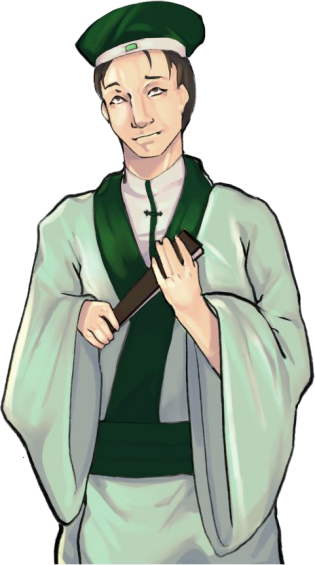
Born into a wealthy merchant family, he has had a strong yearning for the martial world since childhood. However, early on, he was assessed as having no aptitude for martial arts and was denied entry into the martial path. Later, with the reforms in the martial world, which allowed those without martial talent to thrive, he became a fervent supporter of the new martial order, convinced that this new system was the true future of the martial world.
With his family's immense wealth supporting the declining Wudang sect, he succeeded in joining the sect he had always dreamed of. His financial contributions, combined with his silver-tongued "mouth attacks," allowed him to replace the protagonist as the Master’s new favorite disciple. Despite this, he harbored intense jealousy toward the protagonist’s natural martial talents, frequently bullying and undermining the protagonist within the sect. He would even instigate others to mock and humiliate the protagonist's pursuit of martial arts. Whenever the protagonist fought back, the Junior Brother, protected by the Master’s favor, would easily twist the truth, leading to the protagonist being punished.
Due to joining the sect later than others, his combat style is quite rudimentary.
The Junior Brother represents those in society who scheme and take shortcuts to gain power. They have no intention of winning through genuine strength, instead relying on hypocritical and performative morality as a tool to gain power and status that they would otherwise never achieve. They mock those who resist, not from a sense of
superiority, but out of an underlying inferiority—knowing they lack the true strength to succeed through their own merit.
Pixel Arts
Protagonist:
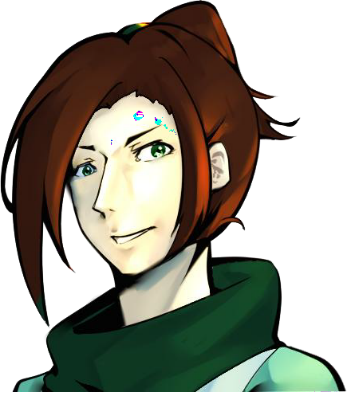
By nature, he is kind-hearted. After his parents were killed, he wandered aimlessly until he was taken in by his Master and joined the Wudang sect. Although he had a natural talent for martial arts, he was quiet and uncommunicative from a young age, which led to him being bullied by other disciples, making him develop a sense of inferiority. Knowing his own weaknesses, he trained tirelessly every day, but no matter how much he improved his skills, he could never earn the favor of others in the sect. He could only live in a small wooden hut in a corner of the sect, doing menial tasks every day to survive.
His nature is pure and he has a strong sense of right and wrong. However, due to his awkwardness with words, he developed a blunt and straightforward personality. When others tried to persuade him with sophistry and hypocrisy, his lack of verbal skills often led him to resort to physical action instead. Unknowingly, he grew estranged from the Master who once favored him.
The protagonist represents those in society who harbor a spirit of resistance. They see through the current state of society, understand that change is needed, and hold a desire to bring about that change. They want to make the world a better place where people are not manipulated or controlled by hypocrites. Their ultimate goal is to pursue free will and true morality.
Pixel Arts
5.Cutscene Storyboard Design
1.
2.
3.

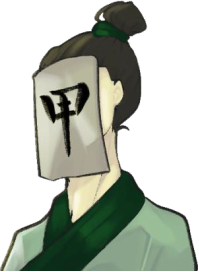
6.Other Arts Mob:
Boar:
Title Screen Art:
Other Sketches:
7.Credits
BENJAMIN ZHANG - PRODUCER
SCRIPT WRITER
CODING LEVEL DESIGN
PIXEL ART ILLUSTRATION CHARACTER DESIGN
JASON MAI - CODING LEVEL DESIGN
HARRY LIU - MUSIC
SPECIAL THANKS - YUYA


Comments